Source underground copper clad steel wire for Overhead Heating Underground
Find 30 listings for underground copper clad steel wire suitable for overhead, heating, and underground applications. Buyers can compare specifications like conductivity, mechanical status, and packaging options from verified suppliers in China.
Key considerations
Products List




Comprehensive Sourcing Guide
Underground Copper Clad Steel Wire Sourcing Guide
Sourcing underground copper clad steel wire requires a nuanced understanding of material science, commercial logistics, and rigorous quality verification. This guide synthesizes observed market data and trusted industry knowledge to help procurement professionals navigate the complexities of acquiring this specialized conductor. By focusing on evidence-based verification steps and clear commercial terms, buyers can mitigate risk and ensure that the supplied materials meet the demanding requirements of underground infrastructure projects.
The following sections provide a structured approach to evaluating suppliers, verifying technical specifications, and managing long-term procurement risks. Each section is designed to address a specific aspect of the sourcing lifecycle, from initial product scope identification to final quality control checks. The guidance is strictly limited to facts observed in current market listings and established industry standards, ensuring that all recommendations are grounded in verifiable data rather than speculative claims.
Product Scope and Observed Listing Signals
The market for underground copper clad steel wire presents a diverse range of product configurations, with observed listings indicating a price range from $0.1 to $1,800 USD and minimum order quantities (MOQs) spanning from 1 to 5,000 units. This wide variance suggests that buyers may encounter both small-scale sample orders and large-volume industrial shipments, necessitating careful alignment of procurement volume with supplier capabilities. The presence of customization options, marked as "Available" or "Yes" across multiple listings, indicates that manufacturers are flexible in adapting wire dimensions, conductivity percentages, and packaging to specific project requirements.
Observed product attributes reveal a strong emphasis on durability and specific application environments, with many listings explicitly targeting underground, overhead, and heating applications. The conductor material is consistently identified as copper clad steel, with some listings specifying aluminum clad steel as an alternative standard, highlighting the importance of verifying the exact metallurgical composition. Furthermore, the observed lifespan claims of up to 50 years suggest that these products are engineered for long-term infrastructure use, although buyers should treat such claims as manufacturer observations rather than guaranteed performance metrics without independent validation.
Technical Specifications to Verify
Verification of conductor geometry and mechanical properties is critical for ensuring compatibility with underground installation methods. Buyers must confirm the specific strand configuration, as observed listings include stranded types such as 7x0.16mm, 7x4.115mm, and 19x4.115mm, as well as solid configurations. The mechanical status, whether annealed (A) or hard drawn (H), significantly impacts the wire's flexibility and tensile strength, which are vital for pulling operations in underground conduits. Additionally, the average thickness of the copper cladding should be verified, with some specifications noting a requirement of greater than or equal to 0.254mm to ensure adequate corrosion resistance and conductivity.
Conductivity levels vary based on the percentage of copper content, with observed options ranging from 15% CCS to 40% CCS. Procurement teams must select the appropriate conductivity grade based on the electrical load requirements of the specific underground application, balancing cost against performance. The manufacturing process, often described as four-dimensional continuous electroplating, contributes to the uniformity of the cladding, but buyers should request detailed technical data sheets to confirm that the surface treatment results in a smooth, defect-free finish that prevents premature failure in harsh underground environments.
Compliance and Safety Documentation
Ensuring that the supplied wire meets relevant international standards is a fundamental requirement for underground infrastructure projects. Observed certifications include RoHS, CE, and ISO, which indicate adherence to environmental, safety, and quality management principles, respectively. Buyers should verify that the supplier holds valid certificates for the specific standards applicable to their region, such as DIN, ASTM, GB, or JIS, as these standards dictate the testing protocols and performance benchmarks for copper clad steel conductors. The presence of ISO certification suggests a structured quality management system, but it does not automatically guarantee that every batch meets the specific technical requirements of the purchase order.
Safety documentation must also address the material composition and potential hazards associated with installation and use. While some listings mention reach compliance, buyers should prioritize verification of RoHS certification to ensure the absence of restricted hazardous substances, particularly for projects with strict environmental regulations. Additionally, the insulation material is noted as "Bare" in many contexts, meaning the wire relies on its cladding and external protective measures for insulation; therefore, buyers must ensure that the product specifications align with the intended installation method and that any accompanying sheath materials, such as PVC, are also compliant with relevant safety standards.
Cost Drivers and Commercial Terms
The total cost of ownership for underground copper clad steel wire is influenced by several factors, including raw material prices, manufacturing complexity, and logistics. Observed trade terms include FOB, CFR, and CIF, which define the point at which risk and cost transfer from the seller to the buyer. Understanding these terms is essential for accurate budgeting, as FOB prices do not include freight and insurance, while CIF prices encompass these costs up to the destination port. Buyers should also consider the impact of customization on pricing, as non-standard dimensions or specific conductivity percentages may incur additional manufacturing charges.
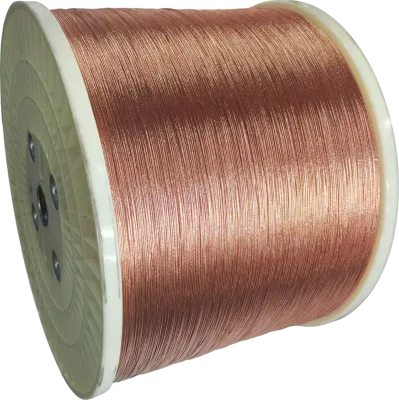
Packaging and shipping methods further affect the overall cost and handling requirements. Observed packaging options include wooden drums, steel-wooden drums, and iron spools, which are designed to protect the wire during transit and storage. The choice of packaging can influence the ease of installation and the risk of damage during unloading. Additionally, the availability of sample orders, often offered on demand, allows buyers to test the product before committing to large volumes, although this may involve separate shipping costs and lead times that should be factored into the procurement timeline.
Supplier Qualification and Quality Control
Evaluating supplier qualifications is a critical step in mitigating procurement risk. Buyers should verify the supplier's origin, with observed listings indicating production in Zhengzhou and Qingdao, China, regions known for their manufacturing capabilities in metal products. However, geographic origin alone is not a guarantee of quality; therefore, buyers must conduct thorough due diligence on the supplier's production facilities, including their adherence to ISO quality management systems and their capacity for consistent production. The availability of samples is a positive indicator, as it allows for physical inspection of the wire's surface quality, cladding uniformity, and mechanical properties before finalizing the order.
Quality control processes should be explicitly defined in the purchase agreement. Buyers should request evidence of in-process inspections and final testing protocols, including checks for conductivity, tensile strength, and cladding adhesion. The observed specification of "High Quality" as an advantage is a marketing claim that must be substantiated by test reports and certification documents. Additionally, the warranty period of 12 months observed in some listings provides a baseline for post-delivery support, but buyers should negotiate warranty terms that cover specific failure modes relevant to underground applications, such as corrosion or mechanical breakage.
Long-Term Procurement Checks
Establishing a framework for long-term procurement checks ensures that the supplied wire continues to meet performance expectations over its projected lifespan. Buyers should implement regular audits of supplier quality control processes, particularly if the order volume is large or the project timeline is extended. Monitoring changes in raw material sources or manufacturing processes is essential, as any deviation from the agreed-upon specifications can impact the wire's performance in underground environments. The observed lifespan claim of up to 50 years underscores the importance of long-term reliability, making periodic quality assessments a prudent investment.
Documentation management is another key aspect of long-term procurement. Buyers should maintain a comprehensive record of all certifications, test reports, and correspondence with the supplier, which can be invaluable for troubleshooting any issues that arise during installation or operation. Additionally, staying informed about updates to relevant standards and regulations ensures that the procured materials remain compliant with evolving industry requirements. By proactively managing these aspects, buyers can secure a reliable supply chain and minimize the risk of project delays or costly replacements due to material failure.
FAQs
What is the conductor material for this wire?
The conductor material is copper clad steel, as specified in the product details. This material combines the conductivity of copper with the strength of steel, making it suitable for various applications including underground and overhead installations.
Can I get samples of the underground copper clad steel wire?
Samples are provided and offered on demand for this product. Buyers can request samples to verify quality before placing larger orders, ensuring the product meets specific project requirements and standards.
What certifications does the product hold?
The product holds RoHS, CE, and ISO certifications. These certifications indicate compliance with international safety and quality standards, ensuring the wire is safe for use in various electrical and structural applications.
How long is the warranty period for this wire?
The warranty period is 12 months from the date of purchase. This warranty covers manufacturing defects and ensures that the product meets the specified quality standards for its intended underground or overhead applications.
What are the available customization options?
Customization is available for this product to meet specific project needs. Buyers can request tailored specifications, packaging, or dimensions, allowing for flexibility in sourcing the exact wire required for their infrastructure projects.
Where is the product manufactured?
The product originates from Zhengzhou and Qingdao, China. These locations are known for their manufacturing capabilities, ensuring that the copper clad steel wire is produced with high quality and meets international standards.
What is the typical lifespan of this wire?
The typical lifespan is up to 50 years under normal operating conditions. This durability makes it an excellent choice for long-term underground and overhead installations where reliability and longevity are critical factors.